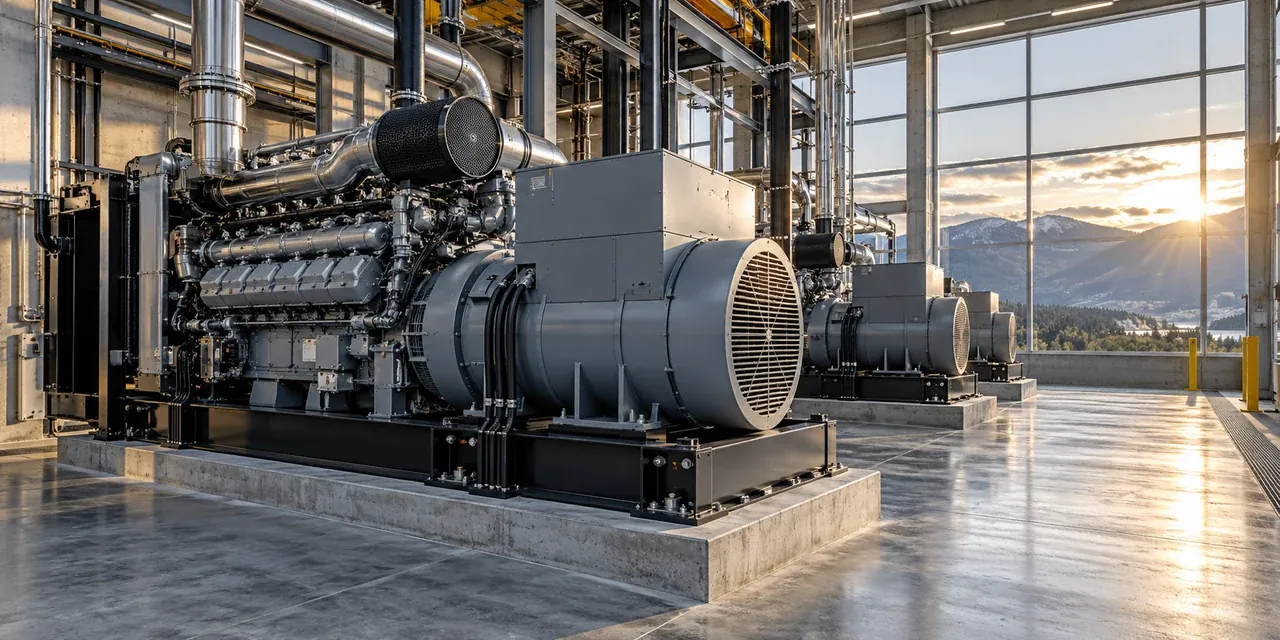
Illustration of a generator beside an industrial facility
ECO EFX Solutions · Hamburg

Technology for engines already in operation

Before committing fleet funds, distinguish what a supplier reports, what an independent source establishes and what your own operation still needs to test.

Illustration of a generator inside an industrial building
ECO EFX Solutions

Product example: NanoEFX

nanoEFX is a water-based treatment for certain engine air filters. EiShin Co., Ltd. manufactures the product in Japan. ECO EFX Solutions is responsible for international commercialisation and distribution. Suitability for a proposed application depends on factors including the engine, filter and operating conditions.

Company-reported information · nanoEFX ↗
ECO EFX Solutions

What evidence supports a funding decision?

  1. Supplier claims

    Check who published the figure, for which engine and against which baseline. ECO EFX Solutions markets nanoEFX; its supplier’s figures are not an independent assessment.

    Supplier figures and dosing
  2. Independent evidence

    Look for a comparable test, its sponsor and its limits. SAE J1321 defines a fuel test for certain trucks and buses. A test method does not establish that a product saves fuel. The sources below do not include an independent head-to-head test of all four products.

    SAE International · J1321 (2025)
  3. Your fleet trial

    Agree on the operating conditions, useful output and full trial cost before starting. Decide in advance what result would justify expansion, a repeat test or stopping.

    Define the trial decision

In Frederikshavn the driving modes changed between periods. The supplier’s adjusted result is a model estimate, not a directly measured saving. Example · Frederikshavn

Operating questions for international markets

Discuss fuel costs, consumption and possible technology use with reference to the country of operation and the actual equipment. The questions below help prepare records in different languages and units. Engine, filter and duty conditions determine what needs technical assessment.

Europe: DACH, UK, Scandinavia and Spain

Markets covered here: Germany, Austria, Switzerland, United Kingdom, Denmark, Sweden, Norway, Spain

Lorry, truck and fleet fuel budgets need a common distance, load and price basis. Distinguish regular operation from standby generation.

USA and Canada

Markets covered here: USA, Canada

Clarify fuel economy and fuel-cost units before comparing records. Identify the gallon standard and the language of the operating documentation.

Spanish-speaking Latin America

Markets covered here: Mexico, Guatemala, El Salvador, Honduras, Nicaragua, Costa Rica, Panama, Colombia, Venezuela, Ecuador, Peru, Bolivia, Chile, Argentina, Uruguay, Paraguay

Fuel records may use diésel or gasoil; bus records may refer to buses, ómnibus or colectivos. Identify the actual fuel and service behind each label.

South Africa and West Africa

Markets covered here: South Africa, Nigeria, Ghana, Gambia, Liberia, Sierra Leone, Senegal, Côte d’Ivoire, Benin, Togo, Guinea, Burkina Faso, Mali, Niger, Mauritania, Cabo Verde, Guinea-Bissau

Separate road fleets, specific vessel engines and diesel generators. Prepare site records and the language used in the technical documentation.

Saudi Arabia, UAE, Oman and Qatar

Markets covered here: Saudi Arabia, United Arab Emirates, Oman, Qatar

Describe the actual load, auxiliary equipment and standby or continuous duty. Keep fuel purchasing and equipment operation in the same comparison period.

Israel

Markets covered here: Israel

Define the same technical terms and units in Hebrew or English records. Identify the engine, application and available measurements.

Russia

Markets covered here: Russia

Distinguish fuel consumption, fuel expenditure and the intended engine technology. Prepare comparable operating records rather than a spending total alone.

India

Markets covered here: India

For DG set records, distinguish rated kVA, operating load and delivered kWh. For vehicle mileage, state the actual consumption or distance unit.

China

Markets covered here: China

Keep fuel consumption, fuel costs and delivered work separate. Record the engine configuration, duty profile and units used in the operating data.

ECO EFX Solutions

Air-filter treatments and fuel additives: what are you paying for?

ECO EFX Solutions markets nanoEFX and has a commercial interest in its evaluation. We also examine alternatives, including changing operations without buying a product. The table distinguishes where each product is used, its supplier’s intended purpose and what a fleet should measure. The linked sources do not contain an independent head-to-head trial of these four products under the same conditions.

How often is it applied, and what fuel savings does the supplier report? → · What does the treatment schedule cost over a year? → · Compare your own figures →

How often is it applied, and what fuel savings does the supplier report?

The two directly comparable products here are the in-tank diesel additives from LIQUI MOLY and Stanadyne. nanoEFX treats an intake-air filter; Unitor conditions residual marine fuel. Figures below are attributed to their suppliers. Different baselines, units and trial conditions rule out a performance ranking.

ProductWhen to treatPublished supplier figure and its limits
LIQUI MOLY Super Diesel AdditiveFor cetane performance and lubricity in low-sulphur diesel, the supplier describes continuous dosing at 1:300. For injector cleanliness and corrosion protection it specifies adding the product every 2,000 km.LIQUI MOLY reports a typical improvement of about 3–5% in fuel efficiency in vehicle and fleet tests. It relates this figure to cleaning dirty injectors and preventing new deposits. The published summary does not give a single common L/100 km baseline. Separately, it reports 3.2% lower average fuel consumption in seven Ulm buses over about 440,000 km (2006–07).
Stanadyne Performance Formula All SeasonParker recommends Performance Formula at every refuelling throughout the year. Budget for all the diesel actually added, not the nominal tank capacity at every stop.Parker reports an average 4% improvement in miles per gallon (MPG), with results up to 9.6%. MPG is distance per unit of fuel. A 4% MPG gain corresponds to about 3.85% less fuel for the same distance; a 9.6% gain to about 8.76%. These conversions are not additional test results.
nanoEFXTreat the suitable intake-air filter at its service interval, not at each refuelling. Allow for repeat treatment when costing the filter.Frederikshavn, February–April 2026: the published case covers one municipal Scania truck, with no parallel control vehicle. Raw consumption was slightly higher. After adjusting for driving modes, ECO EFX Solutions calculated 39.3 → 37.2 L/100 km (about 5.3% lower). This is a model result, not a directly measured saving or a prediction for other vehicles. Scania did not validate the 5.3% figure.
Unitor™ FuelPower ConditionerTreat the relevant marine fuel batch according to its analysis or compatibility test. The treatment is tied to the bunker batch, not to a road refuelling schedule.Wilhelmsen reports up to 2.17% lower specific fuel oil consumption in a B30 VLSFO engine trial using Conditioner together with FuelPower Catalyst. The figure cannot be attributed to the Conditioner alone. Sludge reduction is a separate outcome.

None of these percentages is prefilled in the calculator. To convert a gain in distance per unit of fuel to a reduction in fuel per distance, use: reduction (%) = 100 × gain (%) ÷ (100 + gain (%)).

Compare products and costs
Product and applicationSupplier’s stated purposeWhat to cost and verify
nanoEFXApplied to a suitable engine intake-air filter. It is not mixed with fuel or oil.The supplier proposes the treatment for combustion engines and publishes its own field observations and trial method.Price each filter treatment, repeat applications, labour and downtime. Measure fuel per unit of useful work against an untreated control with a filter in equivalent condition.
LIQUI MOLY Super Diesel AdditiveAdded to diesel fuel. The supplier specifies 250 ml for up to 75 L treated (1:300).LIQUI MOLY describes a detergent and cetane-improving additive for the diesel injection system.Use the purchase price per pack and the volume actually treated. Track injector service costs separately from fuel use; a clean injector is not a measured fuel saving.
Stanadyne Performance Formula All SeasonAdded to diesel fuel. Parker lists a 473 ml pack for 227 L of diesel for the All Season variant (part 38565).Parker describes deposit control and cold-weather protection. Compare its detergent use with the LIQUI MOLY product only where both fit the fuel and duty.Divide the delivered pack price by the stated treated litres. Annual cost depends on treated volume, dosing schedule and labour; price per bottle cannot establish value.
Unitor™ FuelPower ConditionerAdded to a batch of residual marine fuel. The supplier lists a general dose of 1:15,000 and adjusts dosing to fuel analysis or compatibility testing.Wilhelmsen describes asphaltene sludge control. Cleaner separation and lower propulsion fuel use are different questions.Cost the treatment and testing per bunker batch. Compare sludge disposal, separator service and downtime per tonne of comparable fuel. A supplier trial combining two products cannot isolate the conditioner’s effect.

Which comparisons are meaningful?

For diesel additives, compare price per litre of fuel treated using quotations for the same market, currency and tax basis. For nanoEFX, cost a filter and its application interval; for a marine conditioner, cost a bunker batch. Convert each applicable option to a cost for the same fleet, time period and service before comparing. A higher dilution ratio is not evidence of greater efficacy.

How to test an option

Agree on the engine, fuel and OEM requirements before dosing or treating a filter. Run the current maintenance practice as a control and change one variable at a time. Match load, route or output; record price, weather, downtime and measurement error. Publish neutral or adverse results as well. SAE J1321 is a fuel-consumption test method for heavy trucks and buses; it does not validate a product or cover marine operations.

SAE International · J1321 (2025) ↗

From technical possibility to operational relevance

A technology should be evaluated against the problem it is intended to solve. For an existing engine, that means understanding the fuel, the intake and filtration system, the load pattern and the maintenance process before assessing a product. Operational changes such as reduced idling, better scheduling or maintenance may also affect consumption. These influences must be documented if the aim is to understand the contribution of a particular measure.

A practical assessment begins with a representative baseline and a defined measurement period. Compare equivalent work, record any changes and include the cost of implementation. Fuel consumption, CO₂ calculated from fuel use and instrumentally measured pollutants are different quantities. None should be treated as a substitute for the others. The objective is a decision that a technical team and a finance team can both examine.


ECO EFX Solutions

Define the decision before the trial

Financial relevance sets the question

A technology review should start with the decision a company needs to make: whether further evaluation is justified, whether a limited application is appropriate or whether wider deployment merits consideration. Budget owners define the economic threshold and acceptable implementation effort. Technical specialists establish the operating constraints and measurement requirements. Both perspectives are needed before a trial begins.

A comparison that can be challenged

Record what changes, what stays comparable and who is responsible for the data. Fuel price movements, workload, route, weather, maintenance and downtime can alter the economic result. Report fuel quantities separately from expenditure and distinguish calculated combustion CO₂ from measured pollutants. Where the information is incomplete or the result is inconclusive, that limitation belongs in the decision record alongside any favourable observations.

Sustainability and environment

Protecting the environment guides the solutions we choose to pursue. For existing fleets, that means examining fuel use alongside the work performed and the cost of implementation. The environmental outcome remains an open question until it can be measured under comparable conditions.

How we assess environmental effects ↗

Fuel budgets: what should be measured?

Choose a comparable route, load or output and record the fuel used. Report the period, maintenance changes and uncertainty. A change in cost alone says nothing about an engine’s environmental performance.

Discuss assumptions and evidence