
Field report · Germany
Example · Municipal waste collection: what do 16 weeks of fuel records show?
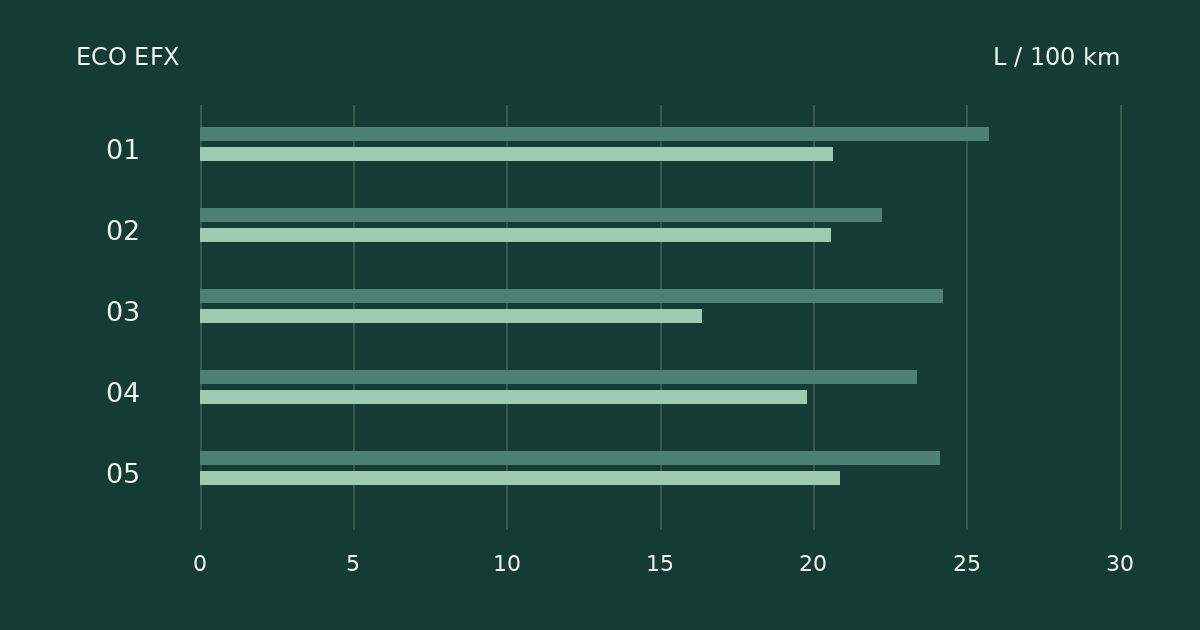
Five refuse trucks worked their regular collection rounds. Each recorded fewer litres per 100 km than in its own earlier period. Did the municipality spend less to collect a tonne of waste? The fuel records alone cannot answer that question.
- collection vehicles
- 5
- vehicle-days recorded
- 296
What was recorded for each vehicle?
The operator supplied fleet-management and daily operating records. The reference covers March–May 2026. The published interim analysis covers 15 June–30 September 2026; the figures below use that window throughout. Drivers were not told about the filter treatment.
| Vehicle | Reference | Trial | Relative change |
|---|---|---|---|
| 01 · Iveco | 25.70 | 20.61 | -19.8 % |
| 02 · Iveco | 22.22 | 20.57 | -7.4 % |
| 03 · Iveco | 24.21 | 16.35 | -32.5 % |
| 04 · Volvo | 23.35 | 19.79 | -15.3 % |
| 05 · Mercedes | 24.13 | 20.84 | -13.6 % |
nanoEFX · German municipal waste operator: vehicle figures, operating records and limitations
What would a finance director need to decide?
For each period, reconcile litres consumed with the weighted net purchase price and tonnes actually collected. This yields fuel cost per collected tonne. Then add the documented application costs, labour and downtime for the whole trial to assess the budget impact. Charge each cost once.
No verified euro saving or CO₂ reduction is reported here. A next trial could pair comparable routes with untreated vehicles over the same weeks and agree the cost and emissions measures in advance.
Sources and scope
Source: ECO EFX’s published analysis of records supplied by an anonymised operator. It is not an independent validation. Temperature data are attributed to the German Weather Service in the source.
nanoEFX · German municipal waste operator: vehicle figures, operating records and limitations